Complex Revision Spine Surgery
An individualized approach to persistent or recurrent symptoms after previous spinal surgery.
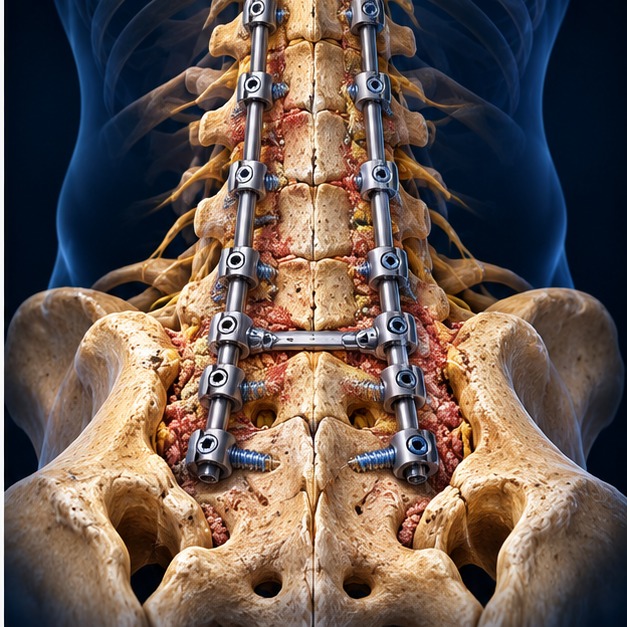
When surgery needs a second look
Revision spine surgery evaluates problems that remain or arise after a prior procedure. These may include recurrent nerve compression, nonunion (pseudarthrosis), hardware problems, adjacent-segment disease, or spinal alignment concerns.
Careful evaluation comes first
Revision planning often requires review of previous operative reports, current symptoms and neurological examination, standing radiographs, CT or MRI when appropriate, and a discussion of prior treatments and patient goals.
Options range from focused to extensive
Some patients may benefit from targeted decompression or limited revision; others require reconstruction, correction of alignment, or revision of instrumentation. Surgery is not always the right next step.
Balancing durability and recovery
Scar tissue, altered anatomy, prior implants, and bone quality can increase complexity. Risks may include infection, blood loss, dural tear, neurological injury, failure of fusion, and need for additional surgery. The aim is to identify the least disruptive option that appropriately addresses the underlying problem.