Anterior Cervical Discectomy & Fusion (ACDF)
A surgical option for selected neck and arm symptoms caused by cervical nerve or spinal cord compression.
What is ACDF?
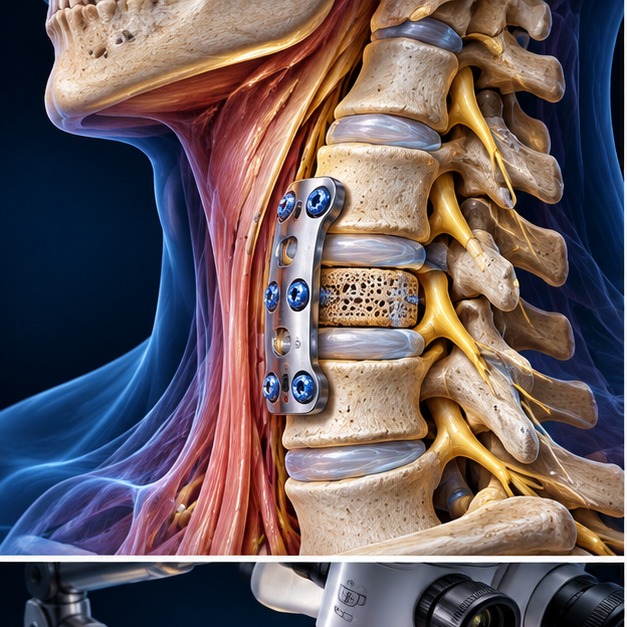
ACDF is performed through an approach at the front of the neck. The surgeon removes a damaged cervical disc and any compressive material as appropriate, then places a spacer or bone graft to support fusion between adjacent vertebrae. A plate and screws may also be used for stability.
When might it be considered?
Depending on imaging and examination, ACDF may be considered for cervical radiculopathy or myelopathy from disc herniation, degenerative narrowing, or bone spurs, especially when symptoms persist or neurological deficits warrant intervention.
Planning and recovery
The number of levels, alignment, bone quality, symptoms, and alternative treatments all affect the plan. Fusion takes time; return to work and activity varies by patient and procedure.
Risks and tradeoffs
Potential risks include swallowing difficulty, voice changes, infection, bleeding, nerve or spinal cord injury, failure of fusion, and problems at adjacent levels. A consultation helps weigh these against the expected benefits.