Oblique Lumbar Interbody Fusion (OLIF)
An anterior-to-psoas lumbar fusion approach that may restore disc height and alignment in selected patients.
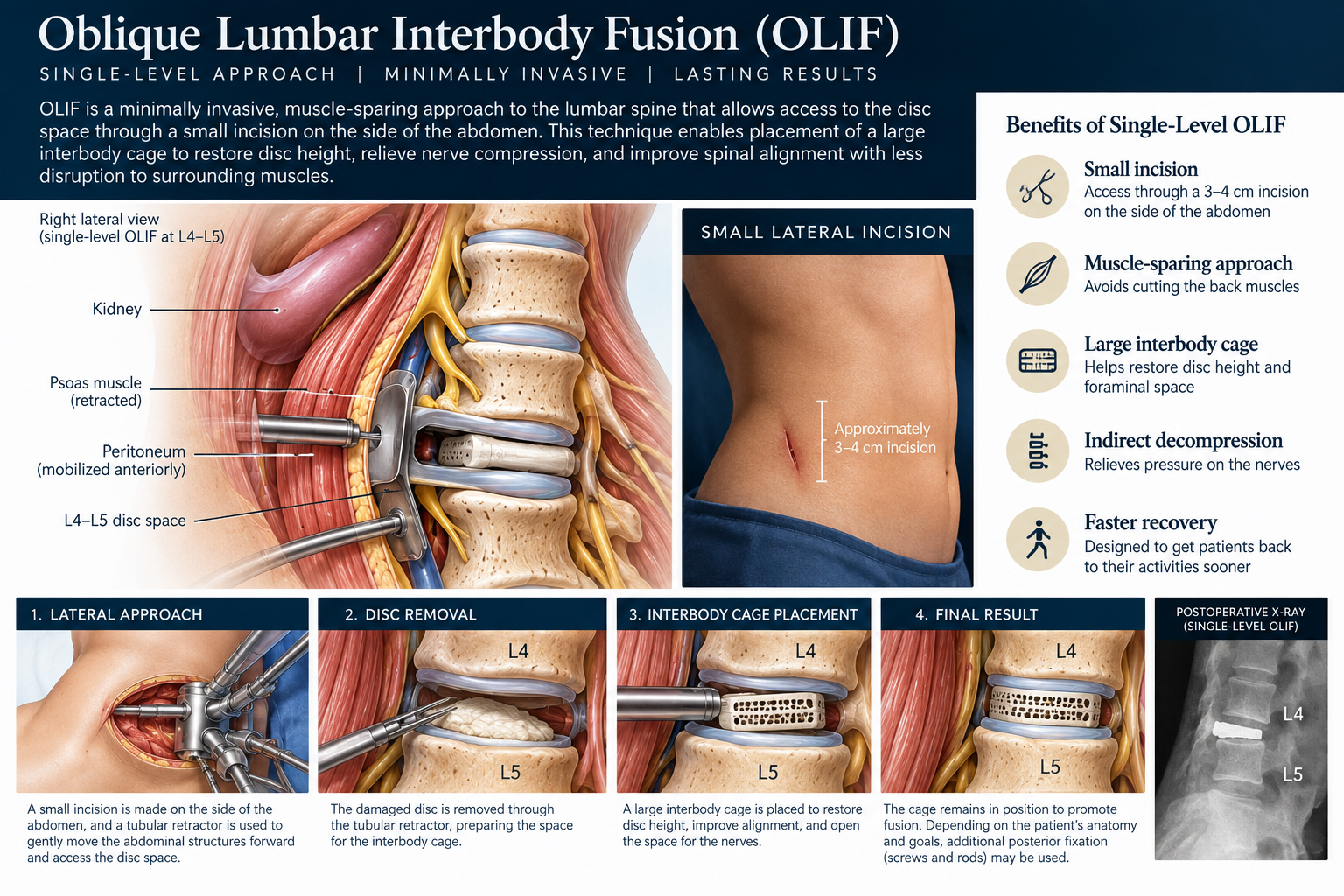
Single-Level OLIF Through a Small Incision
Oblique lumbar interbody fusion (OLIF) accesses one lumbar disc space through a relatively small incision on the side of the abdomen. The corridor passes anterior to the psoas muscle, avoiding broad dissection of the posterior spinal muscles.
How the Approach Works
Disc material is removed and an interbody spacer with graft is placed to support fusion and restore disc height and alignment. This may indirectly create more room for nerves. Additional posterior fixation may be necessary depending on the individual anatomy and stability.
Why the Small Incision Matters
For selected patients, a limited exposure may reduce muscle disruption. The exact incision length and number of incisions depend on anatomy, level, and whether supplemental instrumentation is needed. A smaller incision does not guarantee faster recovery.
When It May Be Considered
Single-level OLIF may be an option for selected cases of degenerative disc disease, instability, spondylolisthesis, or foraminal narrowing when fusion is appropriate. Not every condition or spinal level is suitable.
Risks and Recovery
Risks include vascular or abdominal injury, thigh symptoms, nerve injury, infection, implant subsidence, nonunion, and persistent symptoms. The recovery plan is individualized.